Water is great… most of the time.
In a central heating system? Perfect.
In a basement? Not so much.
And when it’s sitting in a hole, a tank or a flat roof you’re supposed to be working on, it’s just being plain difficult.
That’s where dewatering pumps step in. These little workers quietly save the day every time water ends up somewhere it shouldn’t. Whether you’re on a construction site, dealing with a flooded plant room, or even just trying to stop an area from getting waterlogged, a good dewatering pump can turn a messy job into a manageable one and save you from doing work you just don’t need to do.
What is Dewatering, exactly?
In simple terms, dewatering means removing unwanted water from somewhere it shouldn’t be. Seems obvious, really.
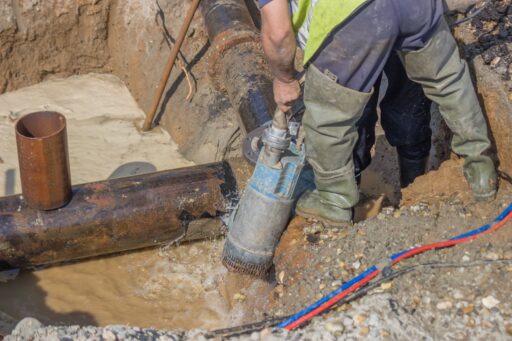
That might be draining a pit, pumping water out of an excavation so work can continue, or emptying a tank or system for maintenance. Basically, if it’s wet and it shouldn’t be, it’s a dewatering job.
The goal is always the same: get the water out, keep things running and protect what matters, whether that’s a boiler system, a building site or your schedule.
And the key piece of equipment? You guessed it… a dewatering pump.
How It Happens
Water has a knack for showing up in places uninvited. A few common culprits include:
- Heavy rainfall: Flooded basements, pits, and excavations (classic British weather problems).
- System leaks or bursts: One minute it’s a small drip, the next it’s a small paddling pool in your plant room.
- Condensation or infiltration: Groundwater or humidity creeping into underground structures… slow, sneaky, and guaranteed to make your day worse.
- Maintenance and testing: Sometimes you’re the one putting the water there, and now you’ve got to get it out again.
Whatever the cause, it all adds up to the same headache: a space full of water you now have to deal with. And while buckets, mops, and a can-do attitude would technically work… a proper dewatering pump will do it faster, cleaner, and without ruining your back.
Dewatering Pumps to the Rescue
The best thing about a dewatering pump is its simplicity.
Drop it in. Power it up. Watch it earn its keep.
1. They Take the Strain Off
When water collects in the wrong spot (like a service pit or basement), it’s not just an inconvenience to you. It’s stress on everything around it: electrics, flooring, pipework, foundations… all the things you’d rather not replace in the next couple of months.
A dewatering pump removes the problem before it spreads. It’s not the most exciting work, but it’s the kind that keeps everything else intact.
2. They Keep Your Projects Moving
Few things slow a job down faster than standing water. You can’t pour concrete, service equipment, or even walk safely when everything’s submerged.
A portable submersible pump lets you get straight back to it in minutes instead of hours.
Less downtime. Less moaning. Fewer cups of tea and waiting for it to dry on its own.
3. They Save You Doing Work You Don’t Need
A flooded area can make everything look worse than it is. A quick dewater and suddenly you can see what’s going on; no overhauls, no unnecessary repairs, and no explaining to a client why you’re still on-site three hours later.
In short, a dewatering pump can save you time, tools, and temper.
Types of Dewatering Pumps (and When to Use Them)
Different jobs call for different tools. There’s no one-size-fits-all solution (unless you’re into disappointment).
Here’s a quick breakdown of the main types:
The go-to option. These are designed to sit underwater, drawing it in through the base and pumping it out through a hose or pipe. Compact, reliable, and very portable.
Best for: site drainage, flooded basements, tanks, and plant rooms.
Designed for moving clear or slightly dirty water, these are your workhorses for general site use. They’ll handle silt and small particles but not heavy solids.
Best for: construction sites, flooded areas and general dewatering.
These sit above ground, creating suction through a hose to lift and discharge water. Great when you can’t submerge a pump or when you need to move large volumes fast. Not ideal for water with large solids or heavy debris.
Best for: open areas, ditches, and long discharge runs.
Choosing the Right Pump for the Job
Picking the right pump isn’t just about flow rates and power; it’s about what’s really happening on site.
Ask yourself a few questions:
- What’s in the water? (If it looks a bit mucky, grab a drainage pump)
- How high are you lifting it? (Head height matters)
- What power supply do you have?
- Do you need to move it around? (Some are portable, others… less so)
Prevention and Peace of Mind: The Real Value
Here’s the thing: a dewatering pump doesn’t just fix problems, it prevents them.
It’s the difference between a quick job and an expensive headache.
Here’s what that means in practice:
- Reduced downtime: You’re not waiting around for puddles to “sort themselves out.”
- Lower maintenance costs: Keeps other pumps, systems, and electrics out of harm’s way.
- Better safety: No slipping, tripping, or playing “guess which socket is live.”
- Fewer callouts: Stops little issues from turning into weekend emergencies.
It’s a small, unassuming bit of kit that’ll happily keep your site (and your boots) dry.
Let the Pump Do the Work
Next time you find yourself dealing with water in all the wrong places, remember that you don’t need to fight it. They’re built to do the hard work for you… no moaning, no breaks, and no excuses.
Because water will always find a way in, but with the right pump, you’ll always have a way to get it out.
Need help choosing the right dewatering pump?
Our technical team is on hand with real advice (not just sales fluff). We’ve seen and heard it all, and we’ll be able to point you straight to the right bit of kit for your job.
Know what you’re after? Don’t let us stop you, click here.