
When water demand starts creeping up, pumps can have a funny way of showing you exactly what they’re made of.
All winter, everything ticks along nicely. No complaints, no pressure drops, nothing to worry about. Happy days. Then spring arrives, usage builds, and suddenly things feel a bit… off. By summer, the system is working harder than it should, and someone’s asking why the pressure has become ‘Houdini’ and vanished from the top floor.
Seasonal demand isn’t dramatic on paper. In reality, it’s where the cracks start to show.
Choosing the right booster pump is less about picking something that works on a good day, and more about making sure it still performs when under pressure. Quite literally.
Understanding Seasonal Demand
Water demand doesn’t gently increase. It tends to spike at the worst possible moments.
Think about:
- Hotels filling up and everything running at once
- Offices and public facilities using more water alongside cooling systems
- Irrigation systems going from barely used to essential
- Residential buildings with everyone home, showering, washing, using water at the same time
Some pumps are designed around average demand. And average demand is not what causes problems.
Peak demand is.
If the system can’t cope when the usage climbs, you get pressure drops, inconsistent flow, and a pump that’s constantly trying to play catch-up.
Step 1: Work Out What the System Really Needs
Before looking at any pump, you need a clear picture of demand at its busiest.
That means understanding:
- Peak flow rate
- Required pressure
- How many outlets are likely to be used at once
- What the system is actually serving
It sounds obvious, but a lot of pumps are sized based on what the system does most of the time. That works until demand increases and the pump runs out of headroom.
If your system has regular spikes, even short ones, the pump needs to handle them without pressure dropping off or constantly switching on and off.
That stop-start behaviour is a quick way to shorten the life of a pump.
Step 2: Choose a Pump That Can Adapt
If demand changes across the day or throughout the year, which it usually does, a variable-speed booster pump is often the better option.
It adjusts output based on demand rather than running at full speed all the time.
That gives you:
- More consistent pressure
- Better energy efficiency
- Less wear on the system
- Quieter operation
Don’t get us wrong though; fixed-speed pumps still have their place. They are simpler and can work well where demand is steady.
But in a system that goes from quiet to busy depending on the season, they can struggle to keep things balanced.
It’s a bit like driving everywhere in one gear. You will get there, but it won’t be a smooth journey.
Step 3: Think About More Than One Pump
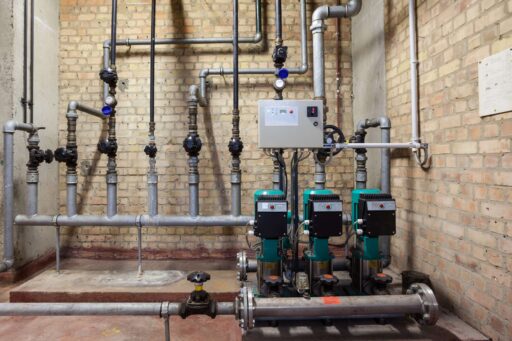
Not every job needs a full multi-pump setup, but relying on a single pump for a system with variable demand can be asking a lot.
You will usually be choosing between:
- Single pump systems for smaller or steady demand
- Twin pump sets, often used as duty/standby or duty/assist
- Multi-pump booster sets for larger or more unpredictable demand
For seasonal demand, having more than one pump gives you options.
Extra pumps can kick in when demand increases, and drop out when things quieten down. It also means you have some level of backup built in, which is never a bad thing.
One pump doing everything might seem fine at first. Over time, it tends to become the weak point.
Step 4: Get the Pressure Right
Flow rate is important, but pressure is just as essential.
You need to account for:
- The height the water needs to reach
- Losses through pipework
- The pressure required at the outlet
If pressure is underestimated, the system might look fine at ground level but struggle higher up. That usually leads to inconsistent performance and unhappy end users.
A properly selected booster pump should handle both flow and pressure without compromise.
Step 5: Think About Running Costs
When demand increases, pumps run more frequently. That is when efficiency starts to matter.
An oversized pump might deal with peak demand, but it will waste energy the rest of the time. An undersized pump will run constantly and still struggle.
Neither is ideal.
A well-matched system should:
- Run efficiently across different demand levels
- Avoid constant starting and stopping
- Keep energy use under control
Variable speed pumps help with this, but correct sizing plays just as big a role.
Step 6: Plan for What Actually Happens on Site
On paper, everything can look spot on.
In reality, things change. Pipework is not always perfect. Demand is not always predictable.
It’s worth asking a few practical questions:
- Is there room for demand to increase in future?
- What happens if one pump goes down?
- Will the system still perform if conditions are not ideal?
Because the real test is not how the pump performs when everything is perfect. It is how it performs when it is not.
How Does PSD Help?
If you are not completely sure what your system needs, it is worth getting a second opinion.
At Pump Sales Direct, the focus is on helping you choose something that actually works in the real world. Whether that is a single unit or a full booster set, the goal is the same. No guesswork, no unnecessary extras, just a setup that does the job properly.
Know what you need? Buy it here.