Most people don’t realise they have a central heating pump. It’s not something you see every day, it doesn’t have a thermostat, and it doesn’t beep at you when it’s unhappy.
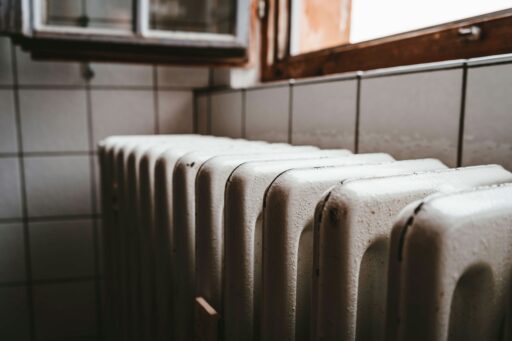
You usually only become aware of it when the heating starts behaving oddly. Radiators take forever to warm up. Some rooms are roasting while others stay stubbornly cold. The boiler seems to be working, but the heat just isn’t getting where it needs to go. That’s usually the moment people start going on a mad Google session to search things like “how long do central heating pumps last?” to find some answers.
What Does a Central Heating Pump Do?
A central heating pump has a simple job: it moves hot water from your boiler around your radiators and back again. That’s it. It doesn’t make the heat, and it doesn’t decide how warm your house should be; it simply keeps the water moving. Without it, your heating system just doesn’t circulate heat properly.
When it’s working properly, you never think about it. When it isn’t, the whole system feels slightly “off”, even if nothing has completely stopped yet.
Where to Look
This is one of the most common points of confusion, and it depends on the type of boiler you have.
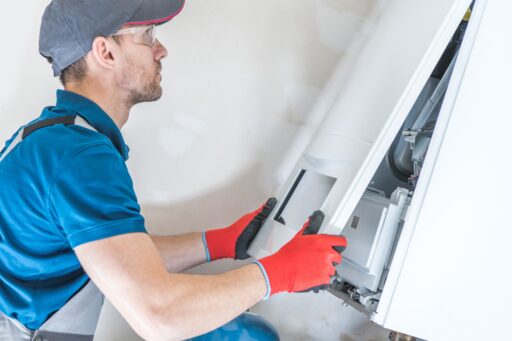
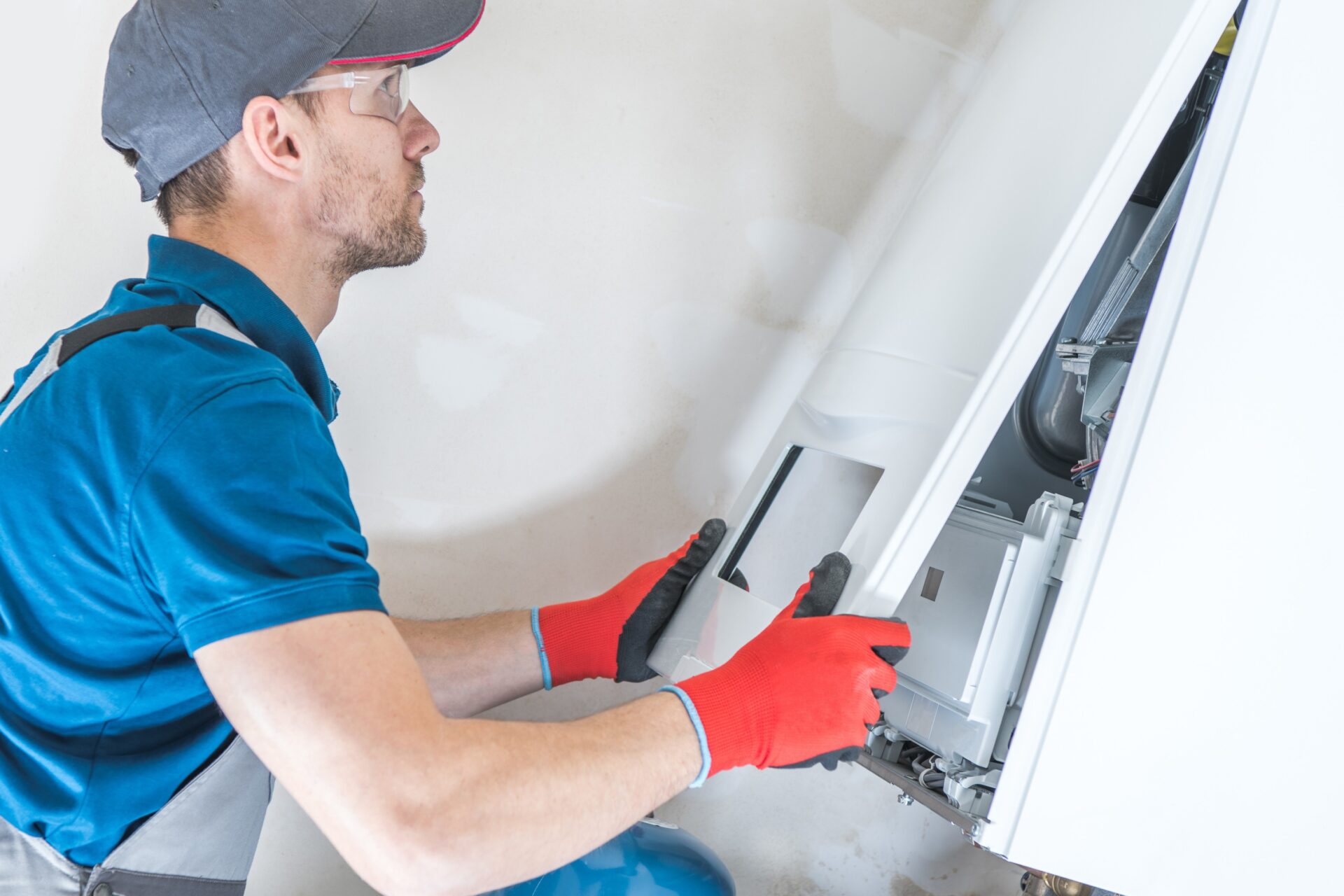
If you’ve got a modern combi boiler, the pump is usually inside the boiler casing. You won’t see it unless the cover is removed. If you’ve ever spotted a little round unit inside a combi boiler (often made by brands like Grundfos), that’s usually the pump at work.
With older systems or regular boilers, the pump is often fitted externally on the pipework, typically near the boiler or hot water cylinder. Again, it’s usually a small, round unit with pipes on either side and a cable going into it.
If you can’t see a pump outside the boiler, don’t worry, it hasn’t vanished. It’s probably just inside doing its thing.
How Long Do Central Heating Pumps Last?
Most central heating pumps last between ten and fifteen years. Some go longer, especially if the system water is clean and the boiler has been well maintained. Others give up earlier, usually because they’ve been working harder than they should for a long time.
Things like how often the heating is used, the condition of the system water, and the age of the pump all play a part. If your pump is approaching 10 years old, it doesn’t mean it’s about to fail, but it does mean it’s earned the right to be watched a bit more closely.
Early Signs Your Pump Might Be Failing
They usually give you a few hints before things get serious. One of the earliest signs is noise. A happy pump is quiet, so any buzzing, humming, grinding, or rattling is worth paying attention to. Gurgling sounds often mean there’s air in the system, which can affect circulation and put extra strain on the pump.
You might also notice that radiators take longer to heat up, don’t get as hot as they used to, or heat unevenly around the house. This is often blamed on the boiler, but in many cases, the pump is simply not circulating water as effectively as it once did.
Another common scenario is the boiler firing up as normal, but the heat not travelling properly around the system. This is especially common with internal pumps in combi boilers; everything looks fine from the outside, but performance just isn’t there.
If the pump or the area around the boiler feels unusually hot, that can also be a sign it’s working too hard. And if the heating works one day but not the next, the pump may be struggling to start consistently as its internal components wear.
Why Do Central Heating Pumps Fail?
The most common cause is dirty water in the system.
Over time, small particles of rust and sludge build up inside heating systems. You don’t see them, but the pump certainly feels them. The harder it has to work to move water around, the quicker it wears out.
Air trapped in the system, general age, and older pump designs that run constantly at full speed all contribute to the cause, too. Modern pumps are better at adjusting themselves automatically, which helps reduce strain and improve efficiency.
Can a Pump Be Repaired?
Some minor issues, like trapped air, can sometimes be fixed without replacing the pump. However, persistent noise, overheating, or intermittent heating usually signals it’s time for replacement. For pumps inside combi boilers, servicing or replacement must be done by a qualified engineer. DIY repairs are not safe and can void warranties or cause more damage.
When Should You Replace a Pump?
Most pumps are replaced when they’re over 10–12 years old and starting to show their age. Persistent noise, poor heat circulation, or unreliable operation are usually signs that it’s time.
Replacing a pump before it fails entirely can save a lot of inconvenience (particularly in winter, when heating problems have a habit of showing up at the worst possible moment).
Need Help with Your Central Heating Pump?
If you’re noticing strange noises, uneven heating, or intermittent operation, it could be a sign that your central heating pump needs attention.
Whether your pump is built into a combi boiler or sits externally on the pipework, spotting problems early can save time, hassle, and cold rooms.
For reliable replacements trusted by professionals across the UK, check out Pump Sales Direct’s range of central heating pumps here.