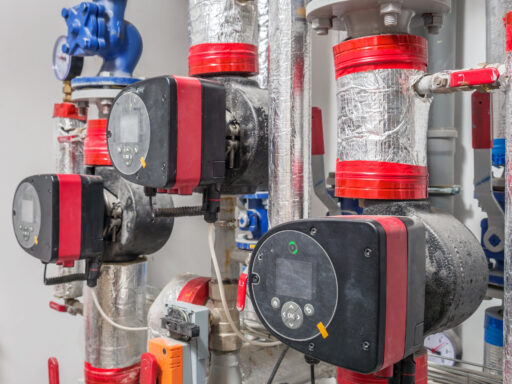
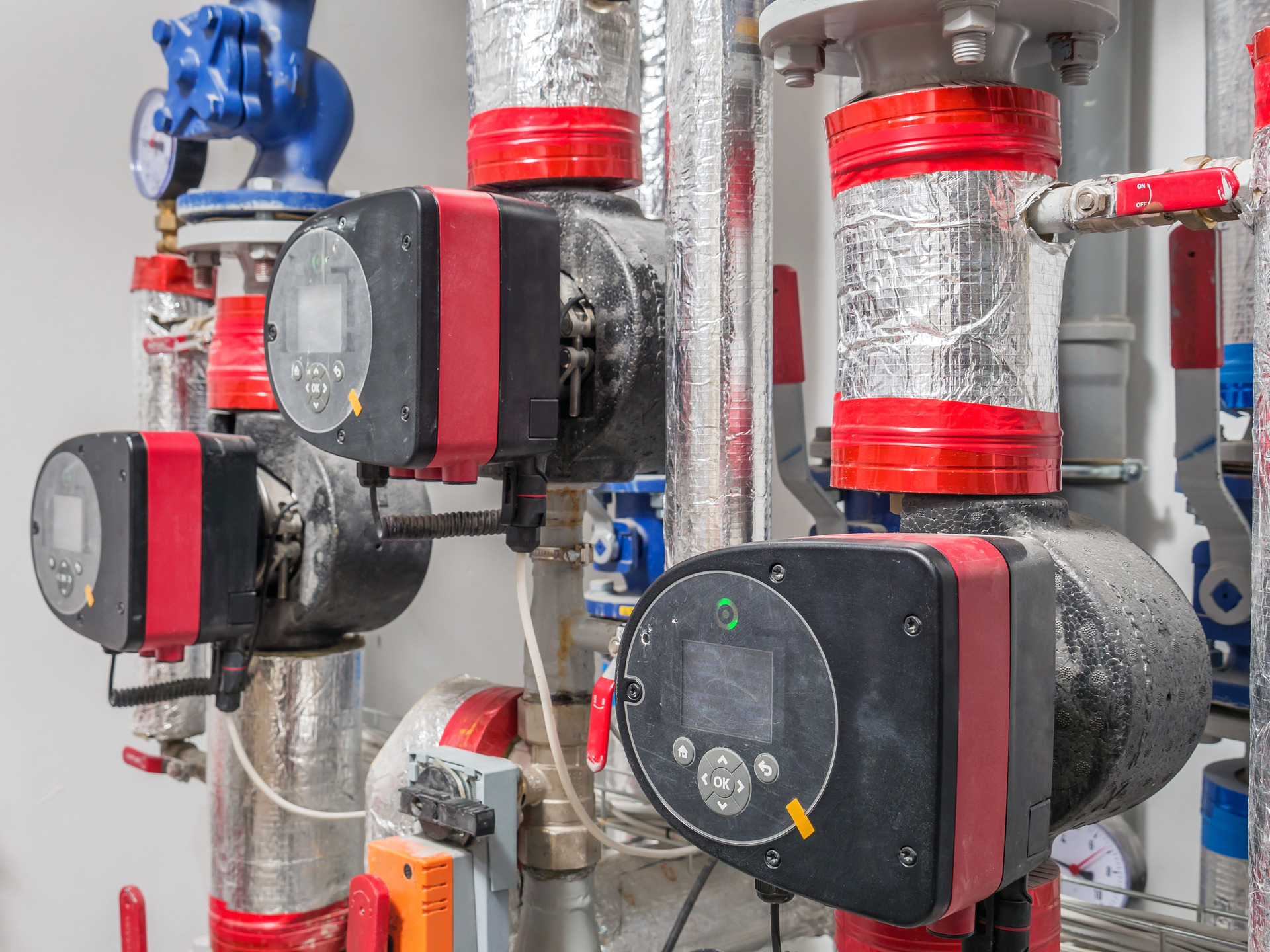
As summer comes to an end, commercial heating systems are starting to come back into regular use. That means the pumps sitting quietly in the background suddenly have a lot more work to do.
Whether you’re working on an office, school, hotel, healthcare building or another commercial premises, the pump is a key part of keeping water moving around the heating system.
But there isn’t one pump that fits every application. Commercial heating systems can use different pump types and arrangements depending on the size of the system, required flow and head, controls and installation.
So, what are the common options, and what should you actually look at when you’re replacing one?
Circulators
Circulators are used to move heating water around a system.
They can be used in different parts of a heating circuit, depending on how the system has been designed. Smaller commercial systems may use a single circulator, while larger systems can require pumps capable of handling much higher flow rates and heads.
Many modern circulators are electronically controlled and offer different operating modes. Depending on the model, this could include fixed-speed operation, constant differential pressure, variable differential pressure or automatic control.
The right setting depends on the system and what the pump is being asked to do.
If you’re replacing an existing circulator, don’t just match the connection size and assume you’re sorted. The pump needs to meet the required duty point, which means looking at both flow and head.
Twin-head pumps
Some commercial heating systems use twin-head pumps rather than a single pump head.
As the name suggests, there are two pump heads within the same unit. Depending on the particular pump and control setup, they can be used in duty/standby or parallel operation.
In a duty/standby arrangement, one pump head operates while the other is available as standby. Depending on the system and controls, the pumps may alternate operation or the standby pump may be brought into operation if required.
In parallel operation, both pump heads can operate together when the system requires additional flow.
Exactly what a particular twin-head pump can do depends on the manufacturer’s specification and the controls being used, so it’s worth checking before specifying a replacement.
Twin-head pumps can be useful where the system requires additional operational flexibility or standby capacity, particularly in larger commercial installations.
In-line pumps
In-line pumps are another common sight in commercial heating systems.
The clue is in the name. The pump is installed directly into the pipework, with the suction and discharge connections arranged in line with each other.
They’re available in a wide range of sizes and specifications and can be used for different heating and cooling applications.
When replacing one, there are two sides to the job: making sure the pump can do what the system needs, and making sure it will actually fit.
Check the connection size and type, dimensions, available space and installation arrangement, as well as the required flow and head.
A pump that performs perfectly on paper isn’t much use if it doesn’t fit where the old one came out.
Variable-speed pumps
Heating demand isn’t constant.
A commercial building might need much more heating during a cold morning than it does overnight, for example. That’s where variable-speed pumps can come into their own.
A variable-speed pump can change its operating speed based on its control strategy and the requirements of the system.
Depending on the model, this could involve maintaining a particular differential pressure, responding to changes in demand or using another control method.
Many modern pumps offer several control modes, so it’s important to select one that is suitable for the actual application rather than assuming every variable-speed pump works in exactly the same way.
Some commercial pumps can also communicate with external control systems or building management systems (BMS) using supported interfaces and accessories.
Duty, standby and multiple-pump arrangements
Larger commercial systems don’t always rely on a single pump.
Depending on the application, pumps may be arranged as duty and standby, with one pump operating while another is available if the duty pump fails or needs maintenance.
Other systems may use multiple pumps operating together. This allows the available pumping capacity to change depending on demand. For example, a system could use one pump during periods of low demand and bring additional pumps online as demand increases.
This allows the available pumping capacity to be matched more closely to the requirements of the system.
Don’t size a pump by connection size alone
A pump’s connection size tells you about its physical connection to the pipework. It does not tell you whether the pump can provide the required performance.
Two pumps with the same connection size can have very different flow and head characteristics.
This is why the manufacturer’s performance curve is important when selecting a pump. The required duty can then be compared with the pump’s performance to establish whether the pump is suitable.
Delivery head is particularly important because the pump must provide enough pressure to overcome the resistance in the system at the required flow rate.
Looking for a replacement commercial heating pump?
Pump Sales Direct stocks a range of pumps for commercial applications. If you’re unsure what you need, have the existing pump’s model number and specification to hand and get in touch – it can help us identify a suitable replacement.