What’s the Difference and Which Do You Need?
If you’re in the plumbing world, you probably know that pumps aren’t one-size-fits-all. However, for those of you diving into a new project or advising customers, it’s important to understand what differentiates a domestic pump from a commercial one, and why picking the right type can save you a ton of time, a headache, and a callback down the line.
Let’s unpack the differences and help you figure out which pump fits the bill.
What Makes a Domestic Pump “Domestic”?
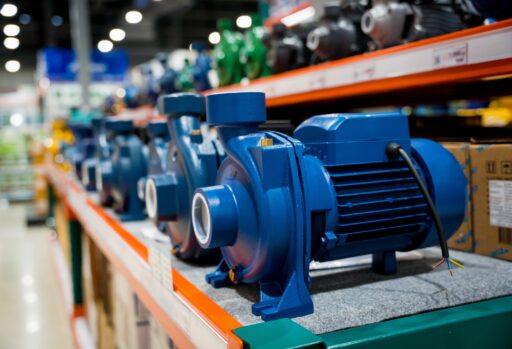
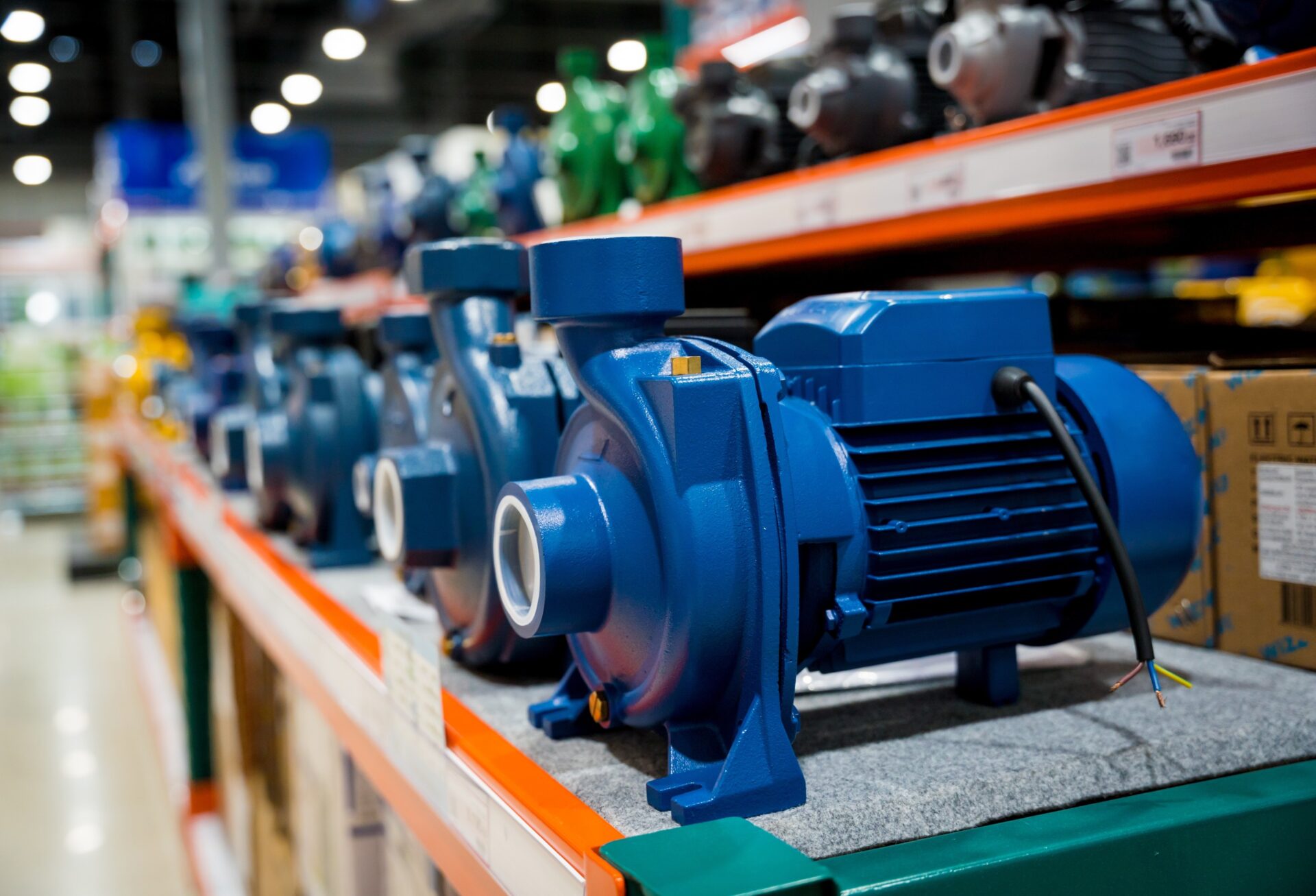
Domestic pumps are intended for homes or small residential buildings. They’re built to handle relatively low flow rates and moderate pressure demands, such as central heating systems, boosting water pressure for showers, or circulating water in small domestic setups.
Key characteristics include:
- Lower flow rates: The flow rate of a domestic pump is typically between 1-4 cubic metres per hour. This is enough to supply a house, but not a high-rise office building.
- Compact size: Space is often limited under stairs or in a cupboard, so domestic pumps are smaller and easier to install.
- Simple control: Most domestic pumps come with basic on/off switches or standard thermostatic controls. A few modern models include energy-saving motors or variable speed options, but these are less common than in commercial systems.
- Ease of maintenance: Designed with the homeowner or small service team in mind, domestic pumps are generally easy to access and service.
Examples include small booster pumps, circulating pumps for hot water systems, and pressurisation units.
What Makes a Commercial Pump “Commercial”?
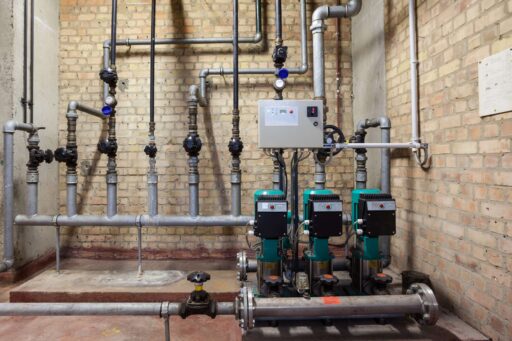
Commercial pumps are a whole different beast. They’re purposely designed for larger systems with higher flow demands and more complex operating conditions. Think office buildings, schools, hospitals, hotels, or some industrial sites.
Here’s what makes commercial pumps different to domestic:
- High flow rates: These pumps can move hundreds of litres per minute, sometimes even thousands, depending on the application.
- Tougher construction: Commercial pumps are built to handle continuous operation and heavier workloads, often with more durable materials like stainless steel or cast iron.
- Advanced control options: Many come with variable speed drives, pressure sensors, and automated controls to maintain efficiency across ever-changing demands.
- Compliance and safety: Commercial installations may need pumps that meet more enhanced or specific standards, beyond BS, EN or CE/UKCA, such as WRAS, fire safety regulations, or energy efficiency guidelines.
Examples include large booster sets, high-capacity circulation pumps, and sewage handling pumps – these are built to keep complex systems running smoothly, day in, day out.
Size Does Matter (for Flow Rate and Pressure)
The most obvious difference between domestic and commercial pumps is capacity. If you try to use a domestic pump in a commercial setting, it’ll be like expecting a little hatchback to tow a caravan uphill – it’ll struggle, overheat, and eventually fail.
On the flip side, using a commercial pump in a home is overkill. It’ll be expensive, noisy, and unnecessarily complex. Matching the pump to the required flow rate (how much water it moves per unit time) and pressure requirements is crucial.
Installation Considerations
Another big factor is installation. Domestic pumps are generally plug-and-play, or certainly quicker to commission: small, lightweight, and easy to tuck away in a cupboard or under a sink.
Commercial pumps, however, often require more planning:
- Space and access: They’re bigger, heavier, and may need a dedicated plant room.
- Power supply: Commercial pumps may need three-phase electricity rather than a standard domestic supply.
- Maintenance access: Larger pumps often need valves, bypasses, and removable parts to make servicing manageable.
Understanding the installation requirements upfront can prevent surprises and extra costs for your customer… or you, for that matter.
Efficiency and Running Costs
Efficiency isn’t just a green tick; especially for commercial clients, it can translate into some serious cost savings over time.
- Domestic pumps: Even without highly advanced controls, domestic pumps are generally energy-efficient due to their smaller size and lower flow requirements.
- Commercial pumps: Because these are running continuously, energy efficiency is a very big factor. Variable speed drives and automated control systems reduce wasted energy, keeping long-term running costs manageable.
A domestic pump may be cheaper upfront, but for a commercial system, skimping on efficiency can cost a lot more in electricity bills and maintenance over the pump’s lifetime.. Consider pipe layout. It takes a few extra minutes, but it prevents hours of work later.
When to Choose Domestic vs Commercial
Here’s a quick comparison guide:
| Domestic Pumps | Commercial Pumps | |
| Typical Use | Homes and small residential systems | Larger buildings and multi-use environments |
| Demand | Lower, more predictable | Higher and often variable |
| System Size | Compact, simple layouts | Larger, more complex systems |
| Controls | Usually simple | Often more advanced and automated |
| Operation | Intermittent | Frequent or continuous |
| Installation | Straightforward | More involved, may require planning |
Domestic is right if:
- You’re working on a single home or small residential block
- Flow and pressure demands are modest
- Space and simplicity are priorities
- Noise levels need to stay low
Commercial is right if:
- You’re dealing with larger buildings or multiple dwellings
- Flow and pressure demands are high or variable
- Continuous operation is expected
- The system requires compliance with safety or efficiency regulations
In some cases, when you’re unsure, you should seek help from an expert who can assess the site, system requirements, and suggest the right model – saving time, money, and the hassle of returns.
How Does PSD Help?
At Pump Sales Direct, we list 13,000+ domestic and commercial pumps and accessories, from pressurisation units to booster sets. We can quickly get the right solution for you, because, as any pro knows, downtime is costly as well as inconvenient.
So next time you’re sizing a system, think beyond “small” or “large.” Consider the flow, pressure, efficiency, and installation logistics. Get it right first time, and both you and your client will thank you.
Check online stock here.